
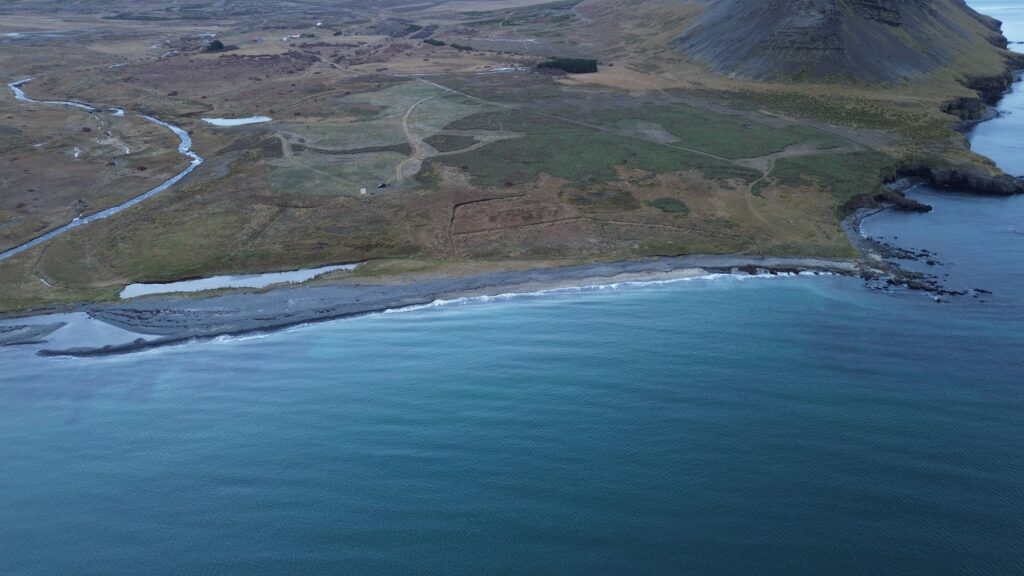
Ingi flew the drone over the colony this week, and for the first time we can see what three days of mowing in July actually look like from the air.
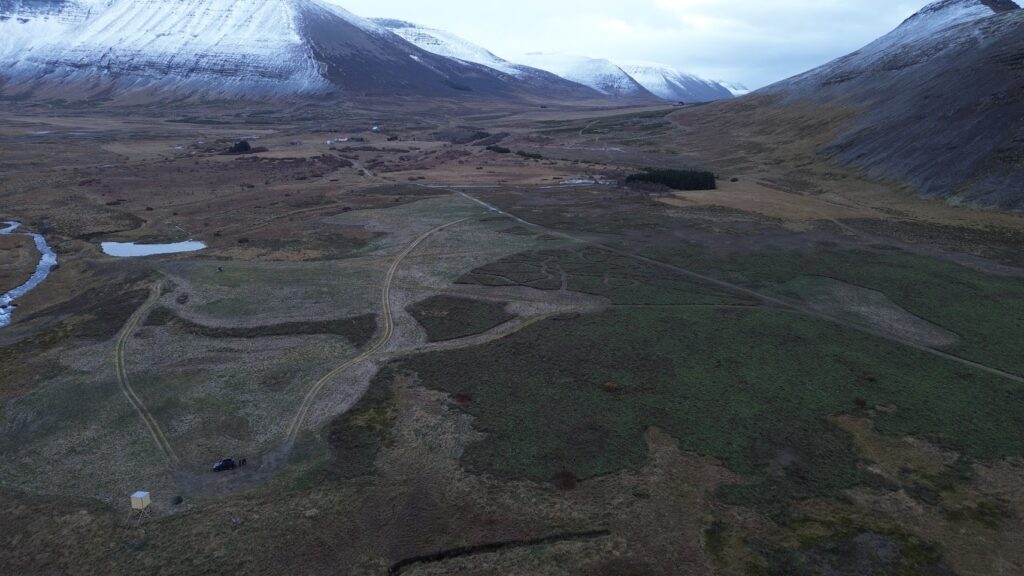
The pale strips are where the lupine was cut. There are three reasons, and the fox is only the first. An eider on her nest needs to see the fox coming, and the fox needs to know it is being watched; lupine grows taller than a sitting bird, so every strip we open is ground the colony can use next May. The second reason is ours: in a wall of lupine we cannot find the nests, and down we cannot find is down that stays in the field. The third is the one that decided it. When the ducklings hatch they have a day, perhaps two, to follow their mother to the sea. In open ground that is a short walk. In lupine it is a maze – and we have found ducklings dead in it, a few hundred metres from the water. That is why the strips are there.
We mow in July, once the last ducklings have followed their mothers down to the sea, and we walk every strip before the mower touches it. That is the one rule that never bends.
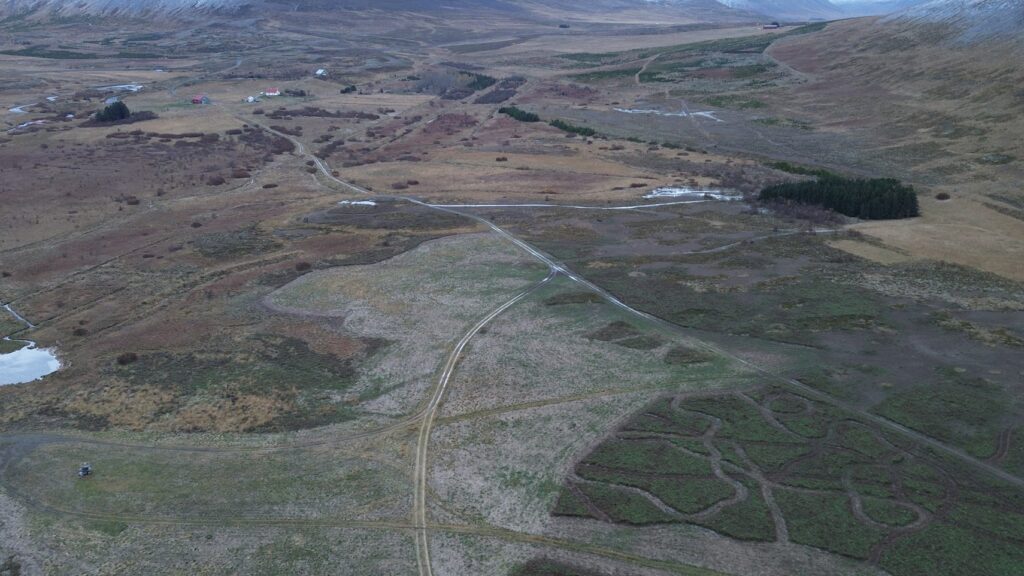
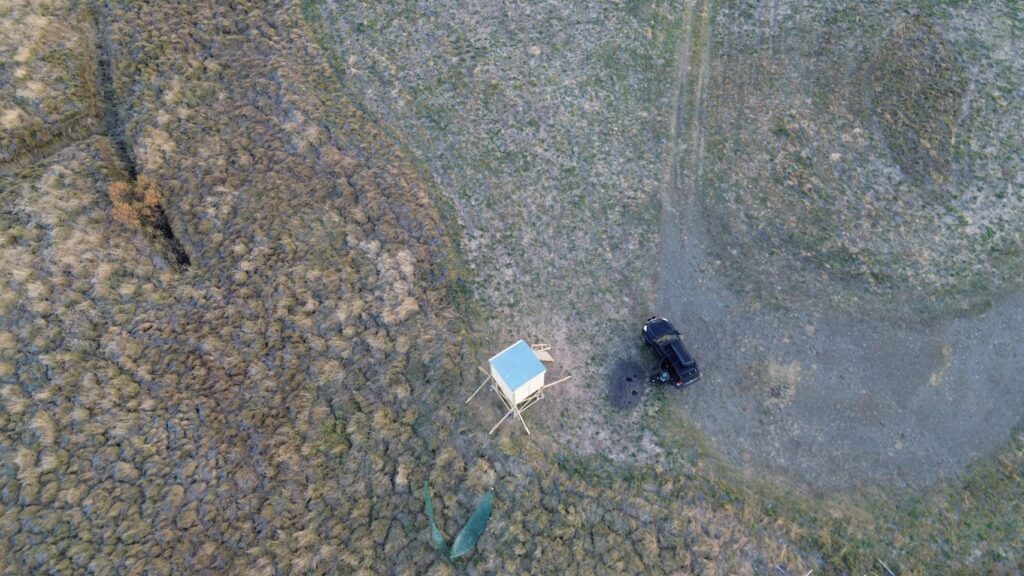
The mower is towed behind the Land Cruiser in first gear, low range, at walking pace – the slowest and most peaceful work of the farming year. Slow enough, it turns out, that somewhere on the third day the straight lines became circles. We have left them in the picture.
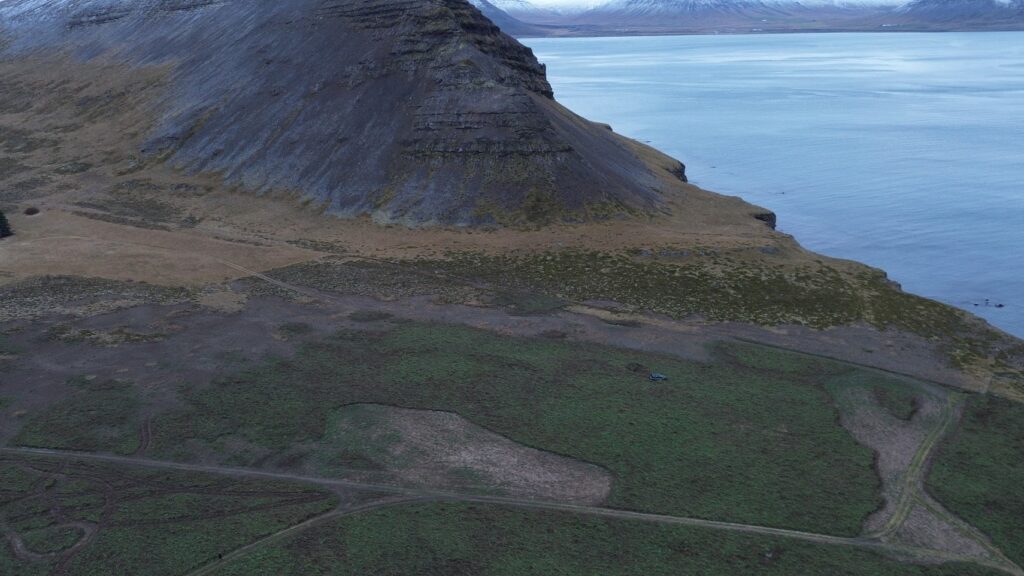
From the sea side – the picture at the top – you can see the whole colony at once: river, pond, the mown ground and the new watch hut on its posts. The hut, seen straight from above, looks very small for something that took three days to build.
Next year the plan is to cut at exactly the right moment again, as we managed this year – full bloom, the first seed pods forming at the base of the stalk – and we are looking at a camera in the colony to tell us when that day comes. A robot that mows and recognises a nest is still a sofa plan. For now, the Cruiser needs a driver.
Read how it went in July: Mowing the lupine – and why it matters.
Follow us on Instagram – @zoffi_eiderdown – for the small moments from Lækur between diary entries: the first eiders in spring, the fjord in every weather, and the work in between.