About us
From Nest to Rest
Tucked along the rugged Icelandic coastline, where the Arctic breeze carries whispers of the sea, a quiet miracle unfolds each spring. The eider duck returns home — to nest, to rest, and to gift the world its rarest warmth.
This is where Zoffi begins.
A Family Tradition
For generations, our family has lived in harmony with the eider duck. We do not raise them in cages, nor do we disturb their natural rhythm. Instead, we offer them protection — building shelters, keeping a watchful eye over the colony through the nesting season, and ensuring their peace.
In return, they leave behind a gift: eiderdown, the softest natural material on Earth, gently collected by hand from the nests once the weather is warm enough for the birds.
Nature’s Finest, Honored with Purpose
Zoffi was founded to honor this exchange between humans and nature — to preserve a centuries-old Icelandic tradition while crafting products that embody purity, sustainability, and understated luxury.
Each duvet we make is filled with down gathered from our coastal farm. No chemicals. No compromises. Just warmth born in nature and elevated by care.
About Zoffi
Zófonías S. Jónsson bought Lækur in 1911 and lived there with his wife Friðrika K. Guðmundsdóttir until 1952. Their youngest son Þorvaldur I. Zófoníasson and his wife Guðbjört M. Sigmundsdóttir took over the farm from them. They had sheep, cows and chicken, as well as a few horses for the first few years. Zófonías started growing an eider colony at Lækur, which was for a time one of the largest Eider nesting grounds in the country. Þorvaldur was a farmer at Lækur until his death in 1982, after which his wife and son Zófonías Fr. Þorvaldsson lived at Lækur, only managing the eider duck nesting and work related to it. Zófonías died in 2023. Snorri Páll Jónsson, grandson of Þorvaldur Z, and Ingi H. Bergþórsson and his wife Ósk Guðmundsdóttir, bought the land, and continue to take care of the eider duck nesting and are also running a tourist service on the farm.
The people of Lækur have always been quick to take up new technology. The farm built its own hydro plant in 1947, when the rest of the fjord still waited for electricity, and rebuilt it for alternating current in 1980. We try to carry that on: today we use artificial intelligence to help us judge the best time to mow the lupine, and AI-assisted cameras to alert us when a fox enters the colony. The down is gathered, dried and processed here at Lækur on our own renewable energy; the final cleaning, sewing and certification are done in Iceland.
Lækur, 1993
In 1993 a crew from Icelandic television spent a season at Lækur and made Maður og æður – “Man and Eider” – a documentary written and directed by Jón Hermannsson and broadcast on RÚV that year. It is in Icelandic without subtitles, so watch it for the land, the birds and the hands rather than the words: the land is the one we still walk every May, and the hands are the ones that taught us.
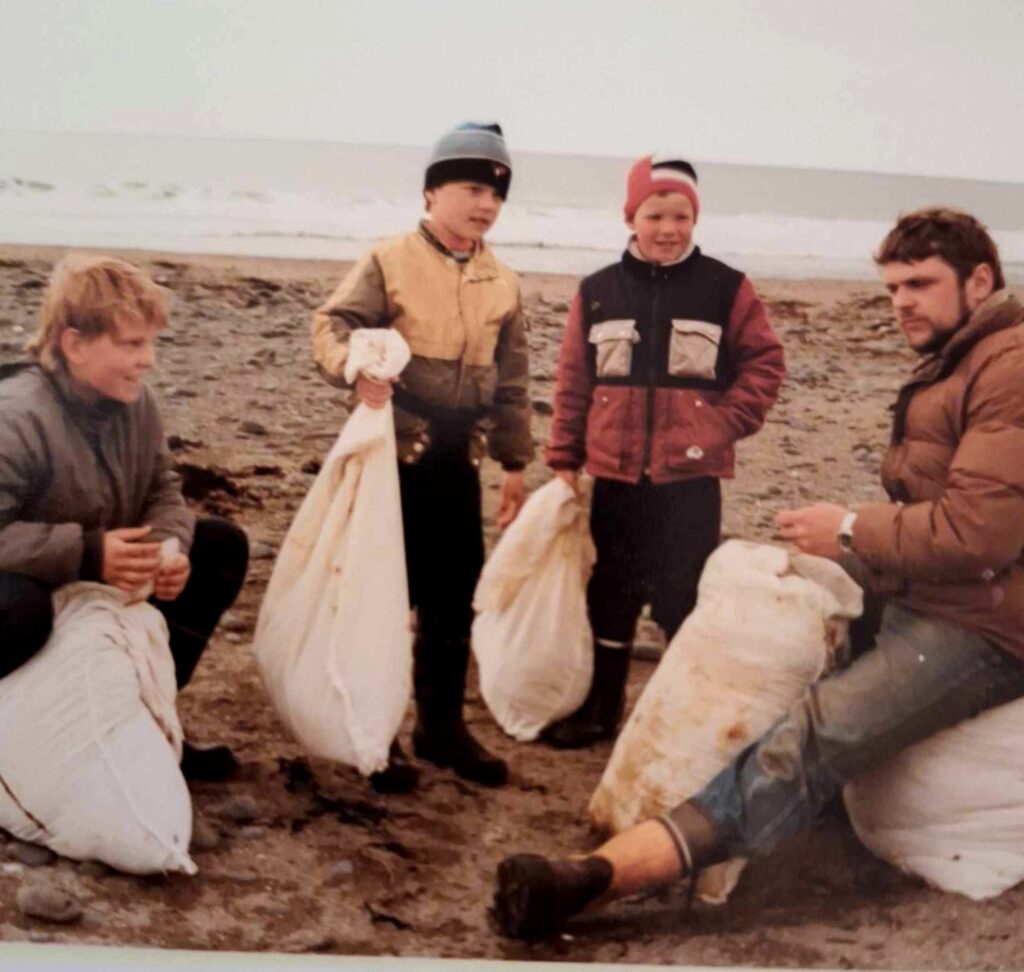
Zoffi is here as we remember him, out in the colony. Our grandmother Guðbjört Sigmundsdóttir appears near the end, sewing an eiderdown duvet by hand – which is where every duvet we make today really begins. And among the helpers are two fifteen-year-old boys, Ingi and Snorri, who would one day keep the watch themselves. Read more about the film in our diary.
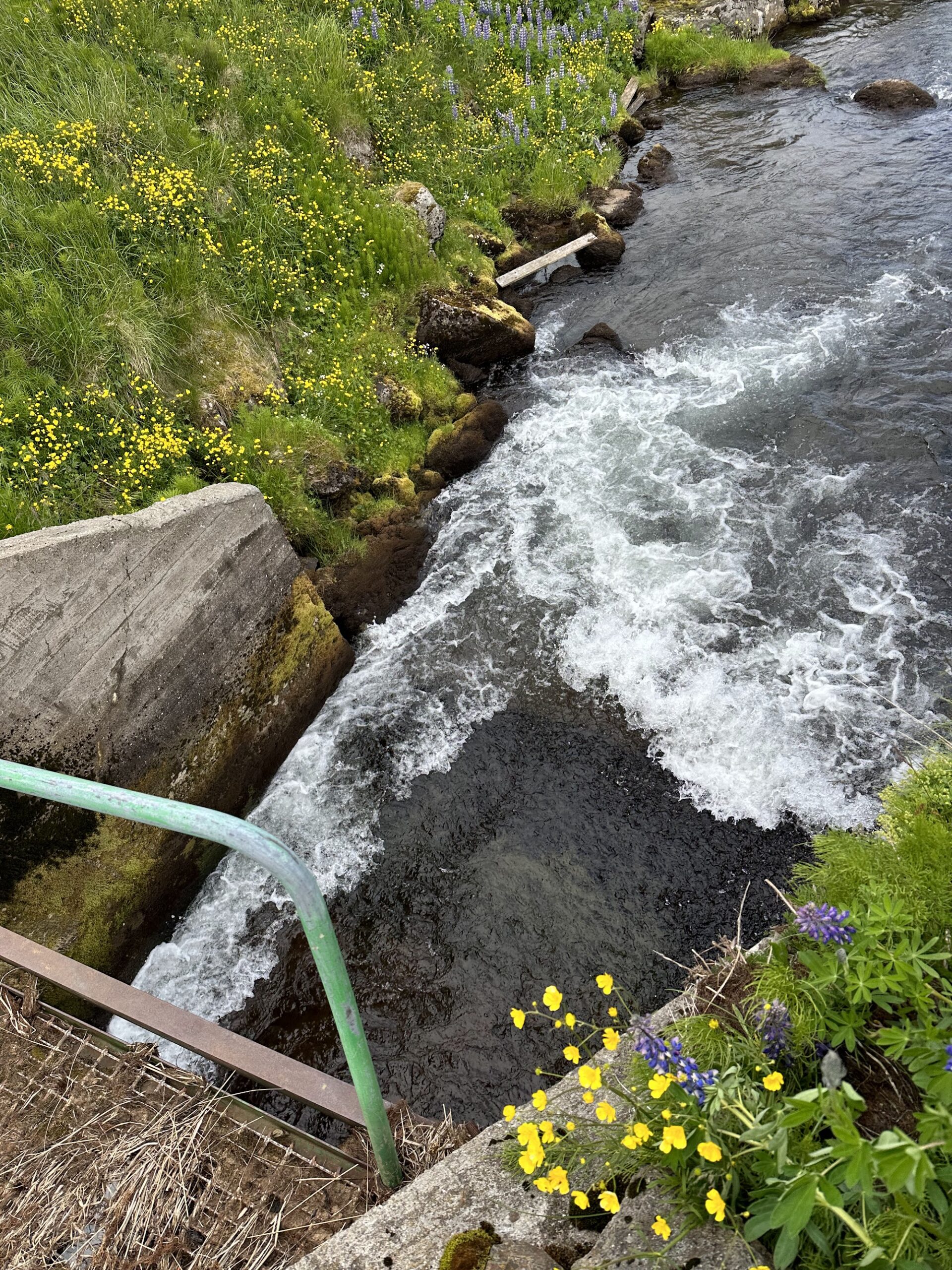
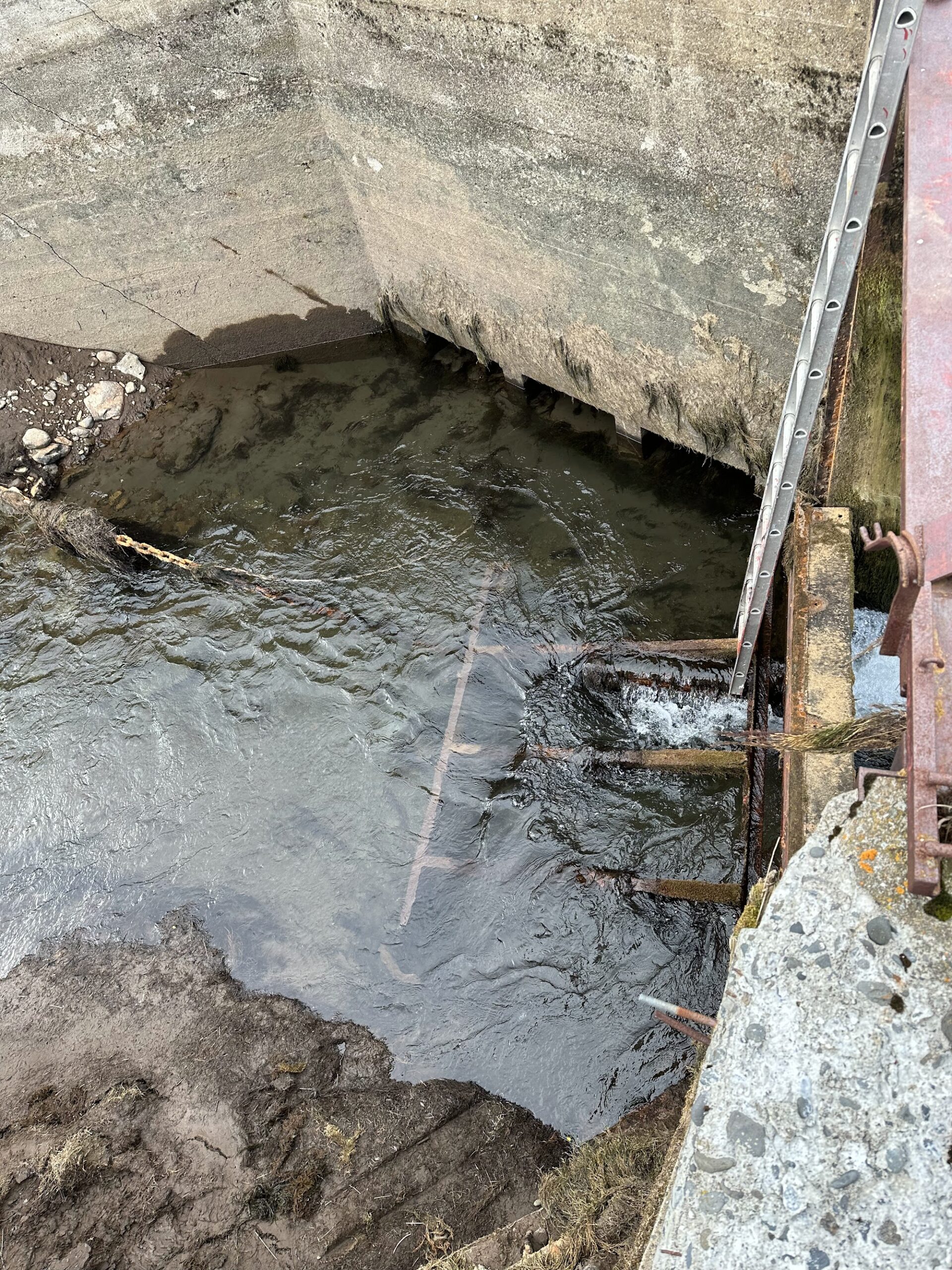
Our Own Power Since 1947
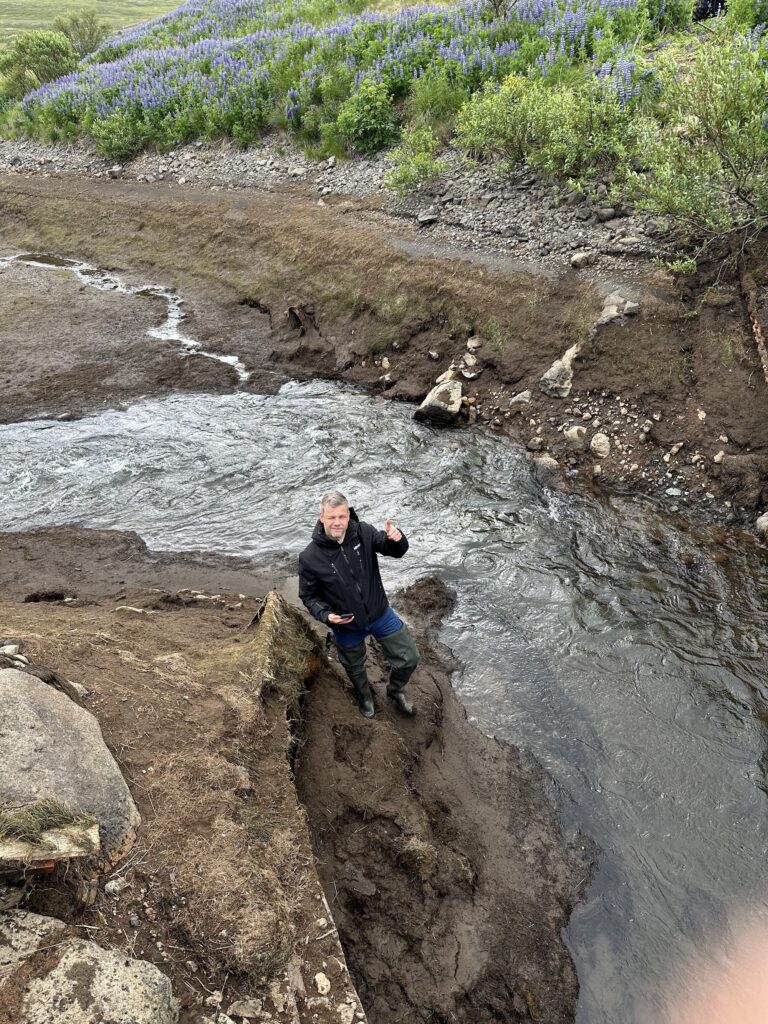
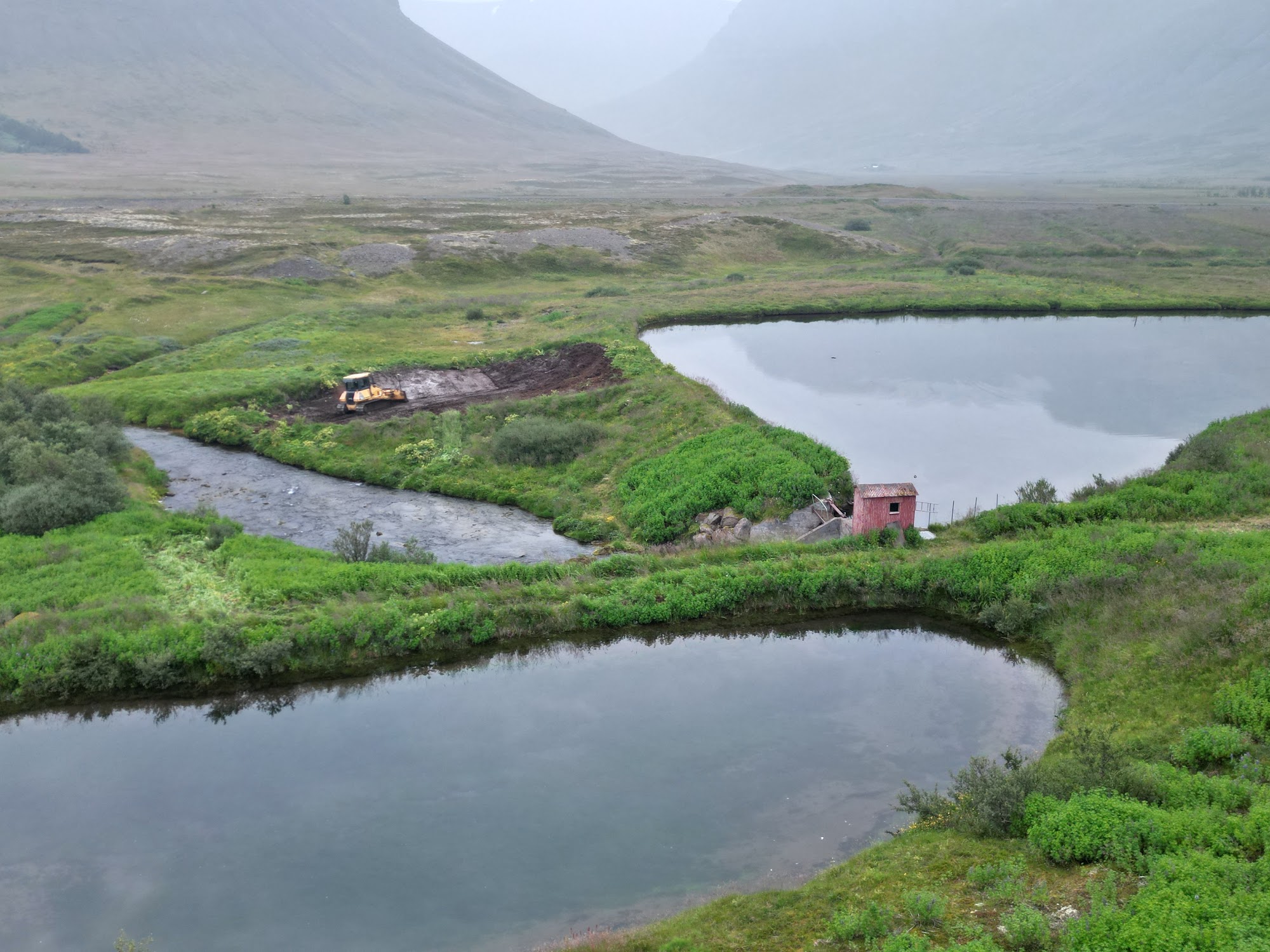
Lækur has made its own electricity since 1947 – fifteen years before the rest of Dýrafjörður was connected to the grid in 1962. The first plant ran on direct current; in 1980 everything was rebuilt for alternating current, which changed daily life on the farm. Today the 30 kW plant on the stream past the colony still produces all the electricity we use, including the considerable amount it takes to dry and process the eiderdown each autumn: damp down from the nests goes straight onto the heaters, is spread on racks, picked through and rough-cleaned by hand before it goes on for its final cleaning. In 2025 we repaired the dam, and a new generator is waiting to be connected. From nest to finished duvet the down stays ours, and the energy behind that work comes from our own water.