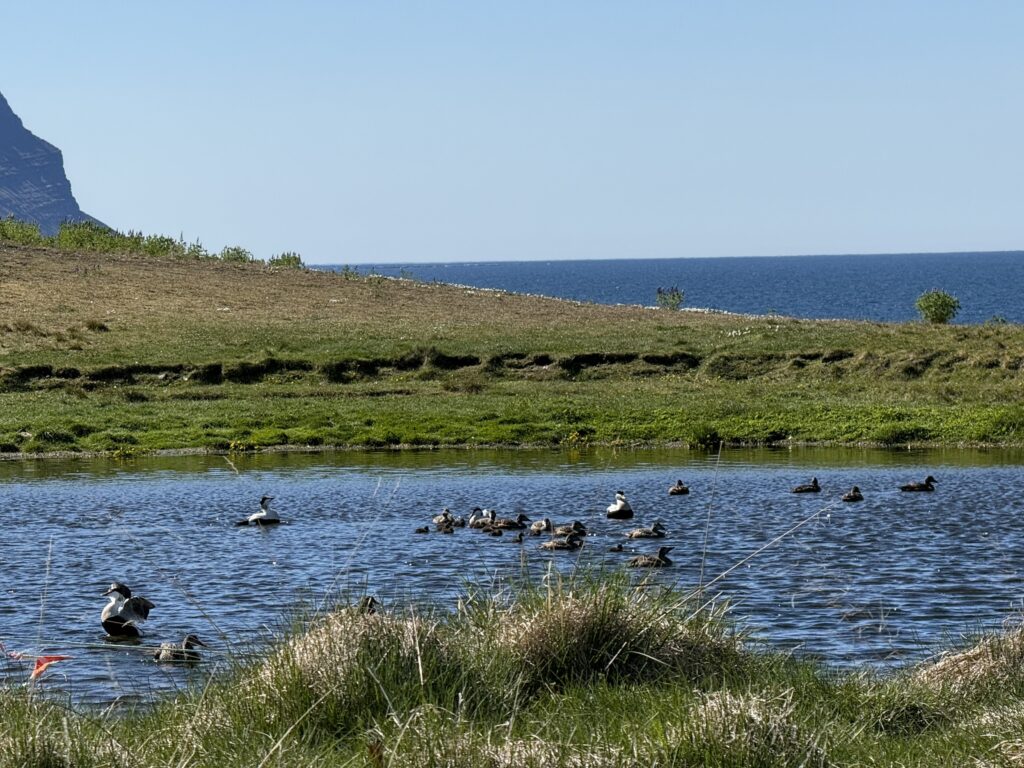
Why is eiderdown so expensive?
Because it cannot be made faster. The eider hens come back to the same spot year after year because they feel safe, and protecting the colony is the real work.
Why is eiderdown so expensive? Read More »

Diary from the eider farm at Lækur in Dýrafjörður – the spring watch, the down collection, the lupine, the tower, and quiet winters.
Because it cannot be made faster. The eider hens come back to the same spot year after year because they feel safe, and protecting the colony is the real work.
Why is eiderdown so expensive? Read More »
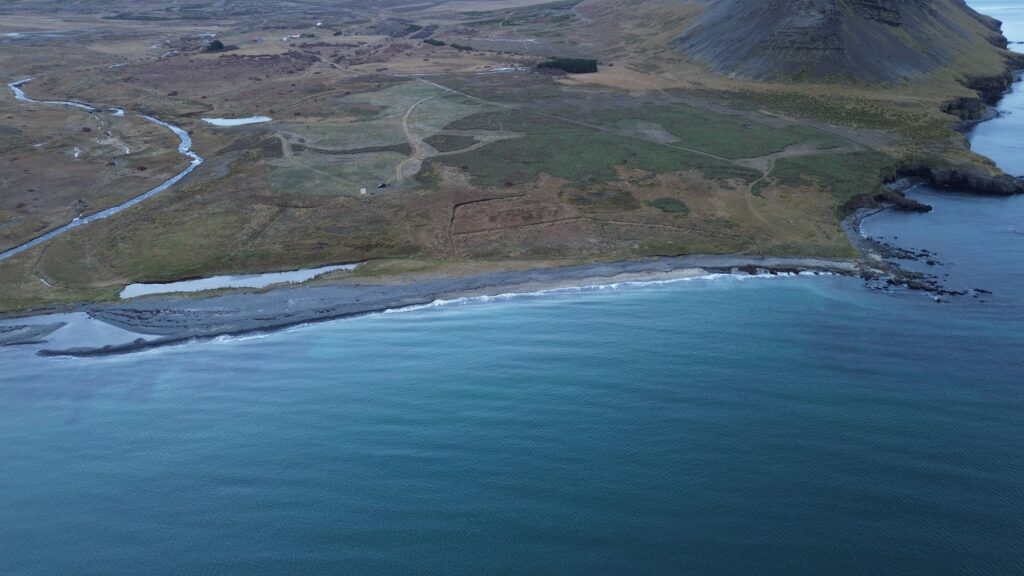
Drone pictures of the eider colony at Lækur in October: the strips mown through the lupine in July, why we cut them – fox, nests and ducklings – and the circles that appeared on day three.
The lupine from above – October 2026 Read More »
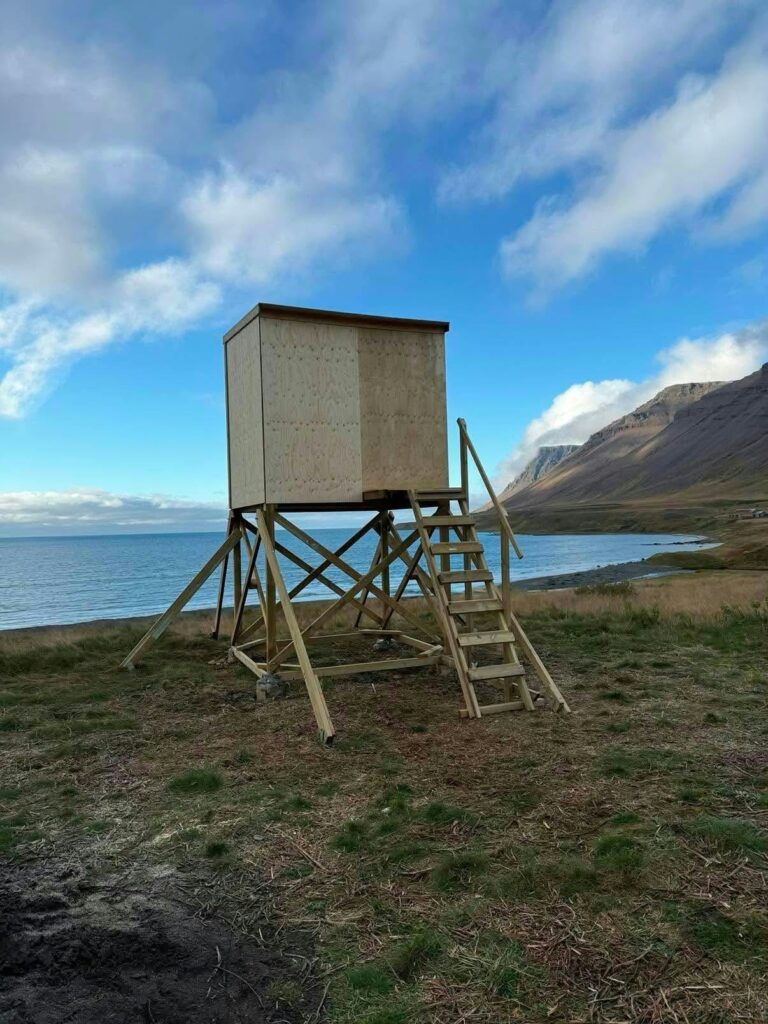
Three days of building at Lækur: the new watch hut above the eider colony is finished, a new garage door keeps the mice and the winter wind out, and the cameras come in after four years without a fault.
Three days at Lækur: a watch hut for the colony Read More »
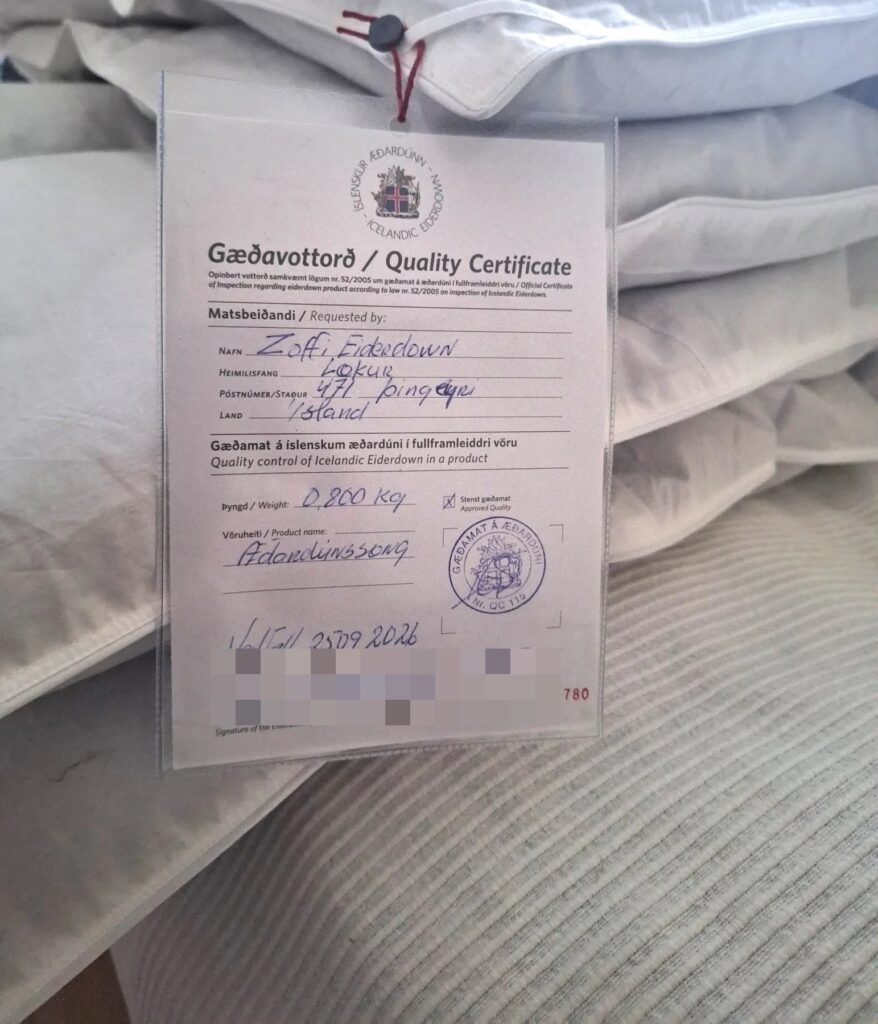
On 25 September 2026 the first duvet of the 2026 harvest – 140 × 200 cm, 800 g – was inspected by a sworn down assessor and given official quality certificate no. 001780.
The first duvet has its certificate Read More »
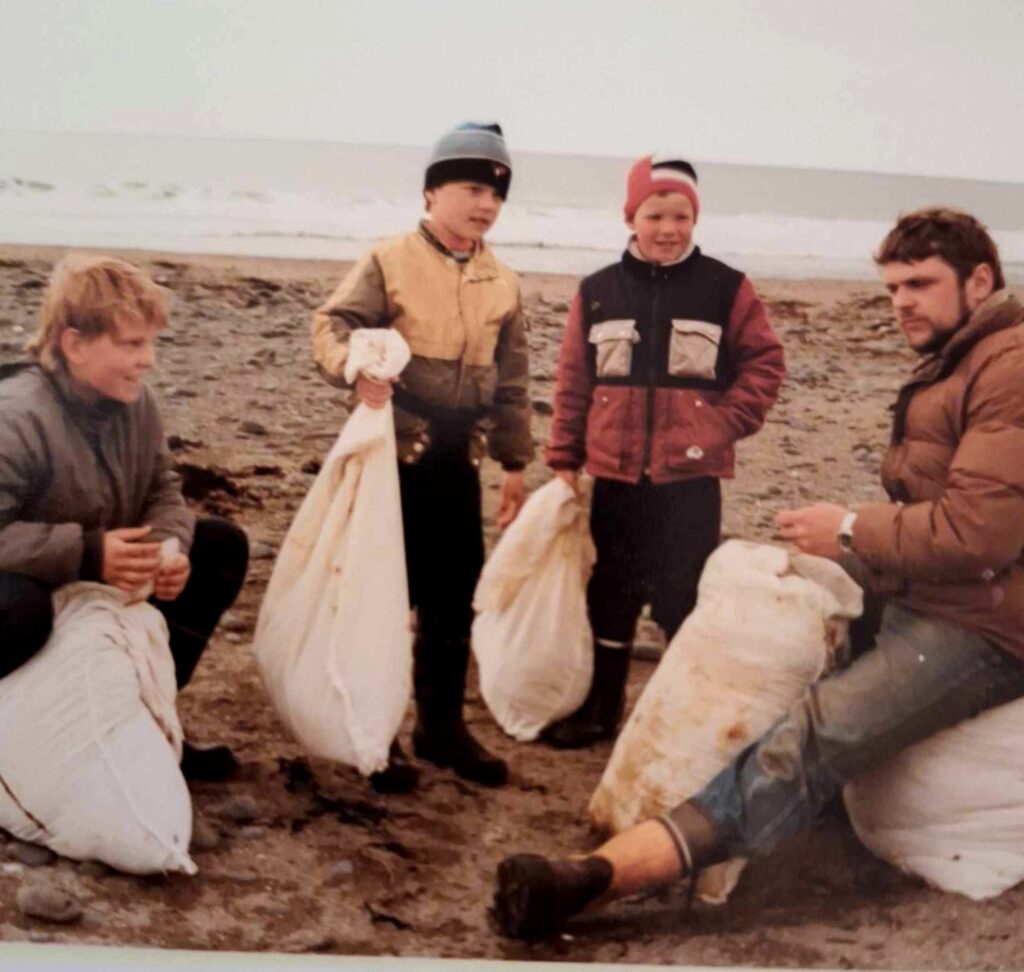
A 1993 RÚV documentary filmed at Lækur: Zoffi, our grandmother Guðbjört, and two fifteen-year-old boys who would one day keep the watch.
From the archive: Maður og æður, 1993 Read More »
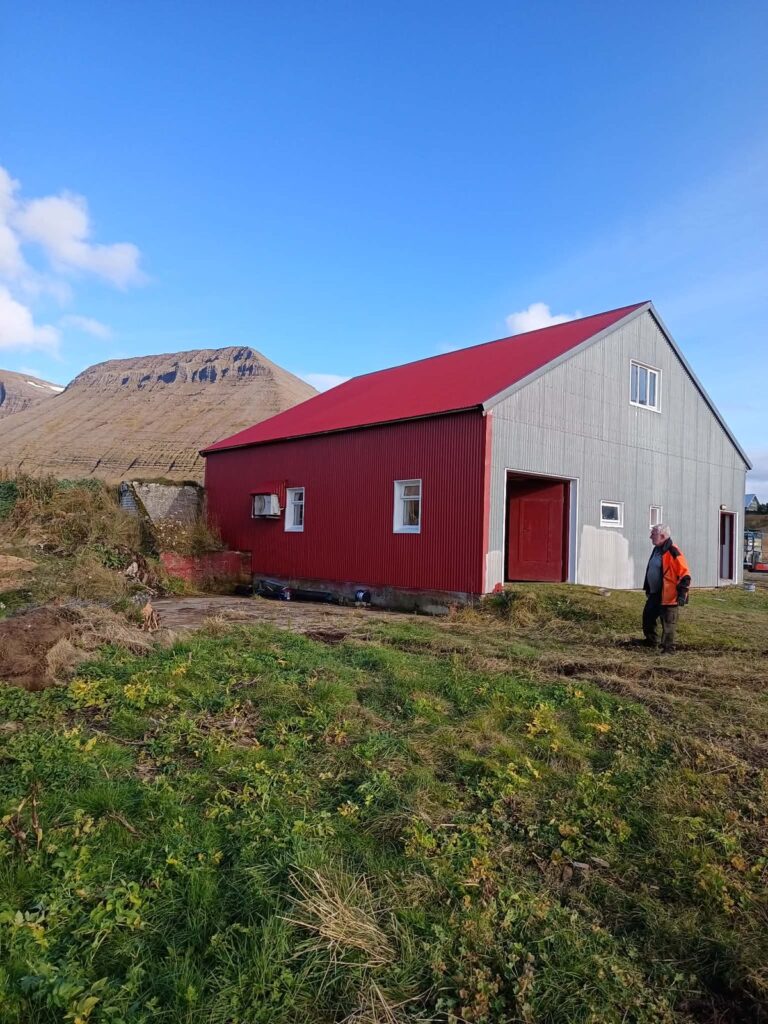
We caught the last dry window of the autumn to paint the roof of the old barn at Lækur – the barn where our eiderdown is dried each summer.
A red roof before winter Read More »
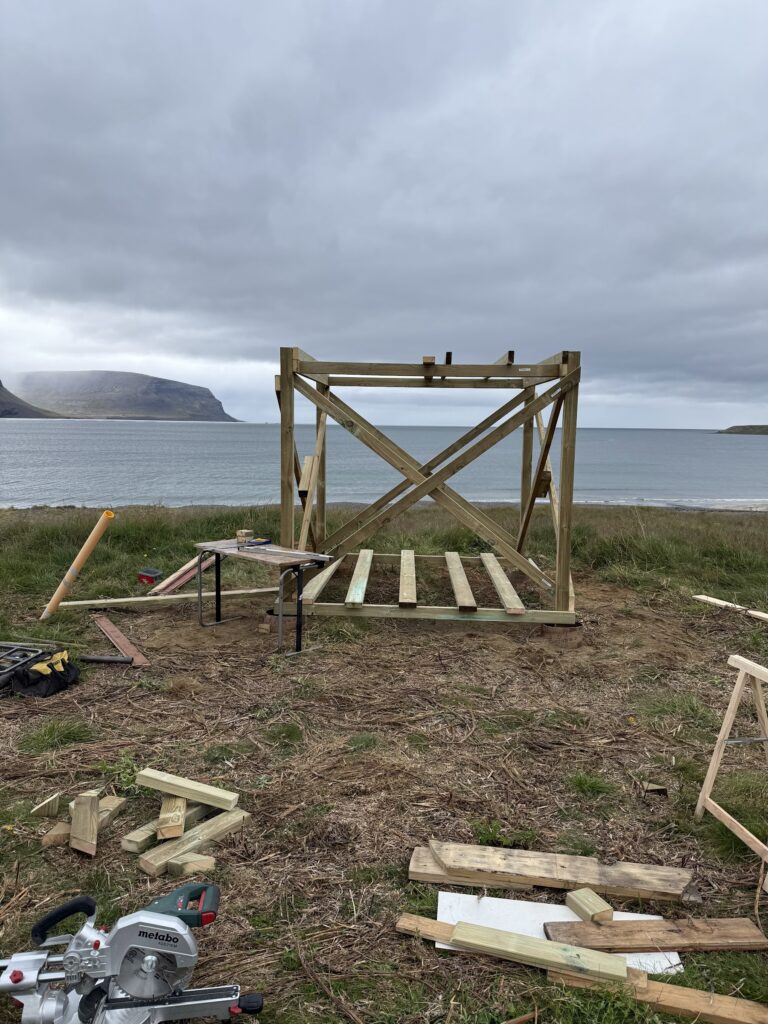
Our newest project at Lækur: a small watch tower deep in the eider colony, so we can keep an eye on the nesting birds without disturbing them.
A new watch tower in the colony Read More »
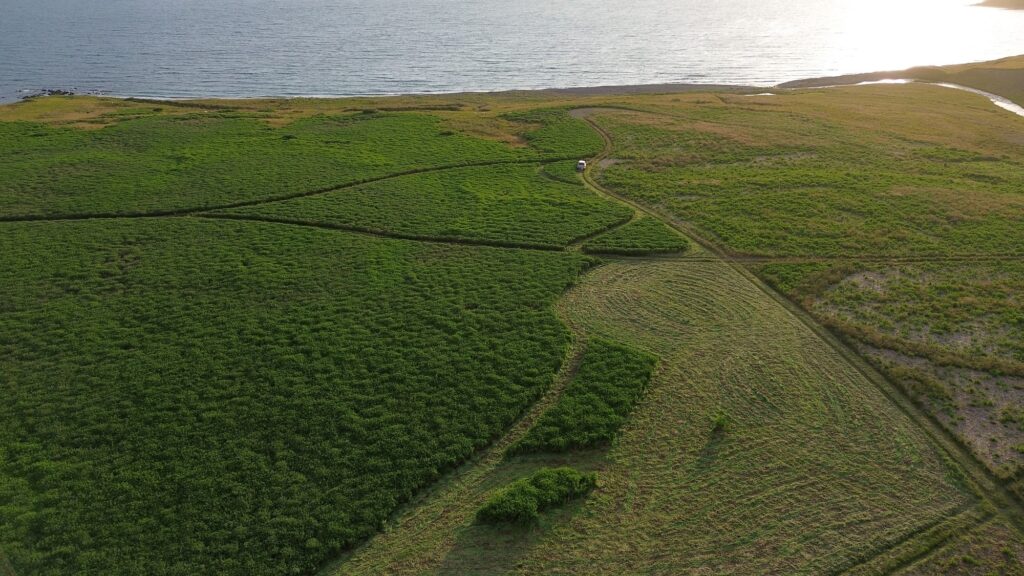
Every July we mow back hectares of lupine in the colony. It looks lovely in bloom, but the eider are much happier without it.
Mowing the lupine – and why it matters Read More »
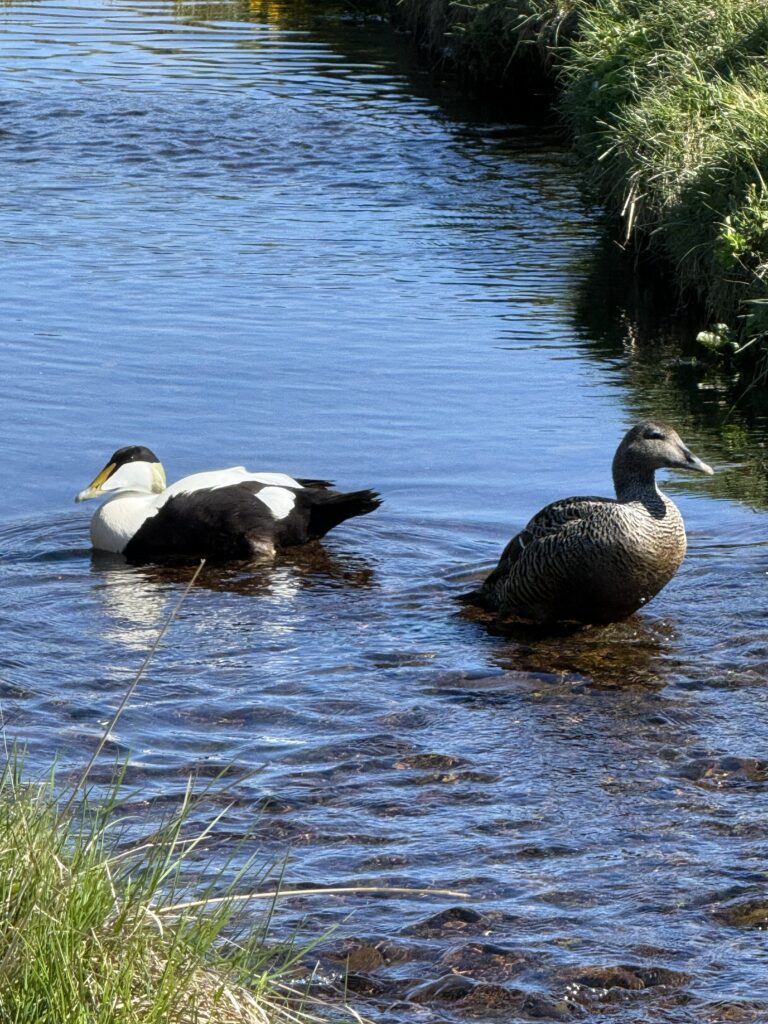
After a spring of watching over the colony, June and July are for gathering the down – by hand, one nest at a time.
The eiderdown collection 2026 Read More »