
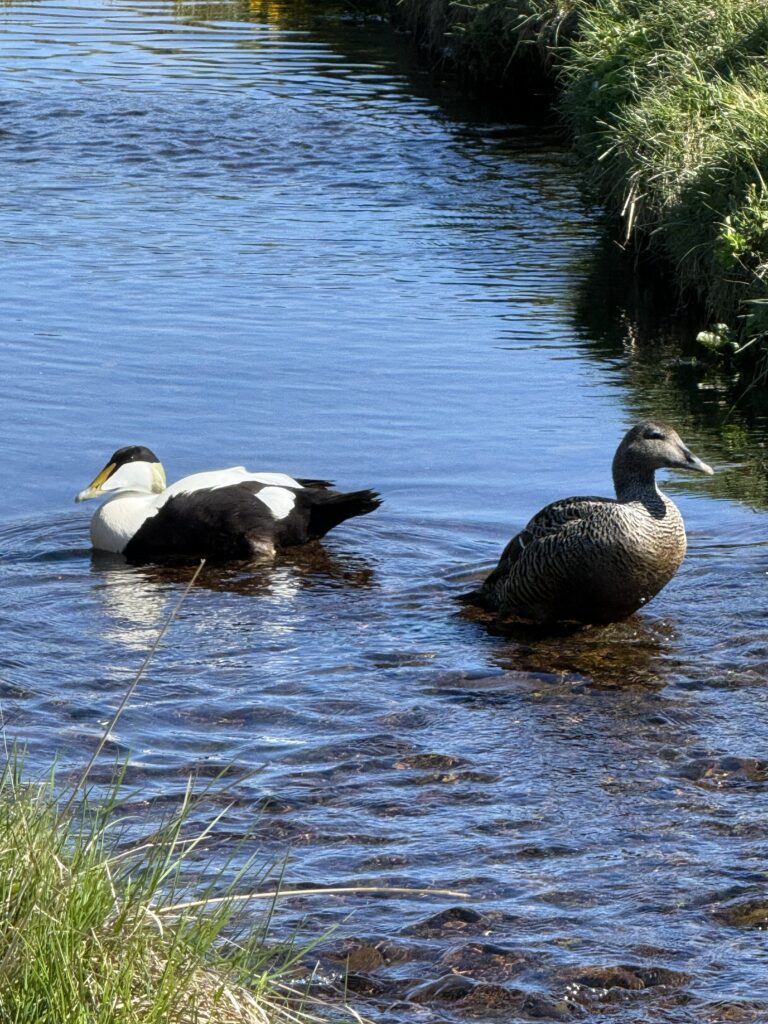
Eiderdown and goose down are both “down” – the fine under-plumage that keeps a bird warm – but that is about where the similarity ends. Here is how they compare.
Where it comes from
Goose and duck down is a by-product of poultry farming. The birds are raised for meat and the down is collected when they are processed (or, in the case of live-plucking, which is banned in the EU but still occurs elsewhere, from living birds). Quality varies enormously with the age of the bird, the breed and the climate, and the very best goose down – Hungarian, Polish, Siberian – comes from mature birds raised in cold climates.
Eiderdown comes from a wild sea duck, the common eider, which nests in Iceland, Norway, Greenland and a few other northern coasts. The female lines her nest with down from her own breast; the down is gathered from the empty nest after the ducklings have left. No bird is farmed, plucked or harmed. Iceland produces most of the world’s supply, and the whole annual harvest is only a few tonnes.
Structure
A goose down cluster is a soft, three-dimensional puff of filaments radiating from a tiny core. Good goose down is measured by “fill power” – how many cubic inches one ounce of it fills – and the best reaches 800–900. Because the clusters slide freely against one another, a goose down duvet has to be sewn into baffle-box compartments to stop the filling migrating.
Eiderdown clusters are different. The filaments carry tiny hooks that cling to one another, so the down forms a coherent, springy mass rather than loose puffs. It holds together on its own, needs far less stitching, and returns to its shape after being compressed. Fill power is not usually quoted for eiderdown, because the clinging structure behaves differently from loose down in the test.
Warmth and weight
Both fillings are warm. Eiderdown, however, gives more warmth for less weight: a full-size eiderdown duvet with 600 g of down is a comfortable all-year duvet, where a comparable goose down duvet would typically need 800–1,200 g. Eiderdown also breathes exceptionally well, letting moisture pass through while the air trapped in the filling stays warm – which is why people describe it as never stuffy.
Durability
A good goose down duvet lasts ten to fifteen years before the clusters break down and the duvet becomes flat and lumpy. Eiderdown is far more resilient. With ordinary care – airing, a cover, occasional professional cleaning – an eiderdown duvet is used for decades and is often passed on within the family.
Price
This is where the difference is starkest. A very good goose down duvet costs a few hundred euros; an eiderdown duvet costs several thousand. The gap reflects the difference between a farmed by-product available by the tonne and a wild material gathered by hand, nest by nest, a few kilos at a time.
Which should you choose?
If you want a warm duvet at a reasonable price, good goose down is a fine choice. If you want the lightest, warmest, longest-lasting natural filling there is – and you like the idea that your duvet pays for a wild colony to be protected – there is nothing quite like eiderdown.
Zoffi eiderdown duvets are made in Iceland from the down of our own colony at Lækur in Dýrafjörður. See the duvets or write to us with any question – we answer every email ourselves.